he Spartan officer who yelled the order at Thermopylae was not a king. He was a coach-type Spartan—an experienced fighter placed behind the phalanx with a stick and a voice. His job wasn’t to fight but to keep the line intact。adjust depth under pressure, and pull wounded men back into formation. I first noticed this in a translation of Xenophon’s Constitution of the Lacedaemonians, where he mentions officers standing behind the troops, correcting mistakes. That detail changes how you read Spartan battles. The famous discipline wasn’t just training;it was active, on-field coaching.What made a coach-type Spartan different from a regular officer?Herodotus describes one at Plataea—a man named Amompharetus who refused to retreat and held his company in place while the rest of the line shifted. That’s not blind obedience;
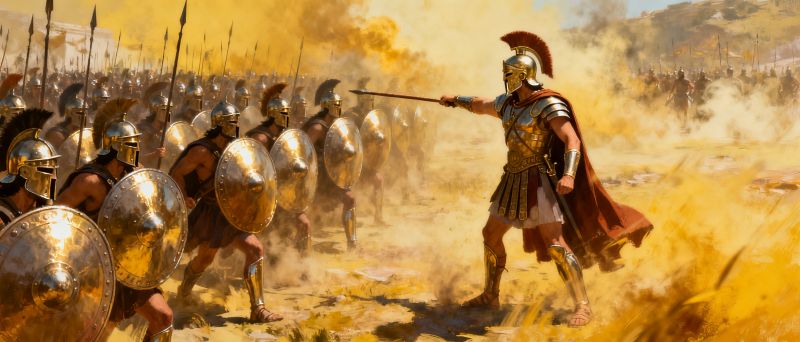
that’s a coach adjusting the game plan under fire. These officers carried no shields in some accounts, freeing their hands to point, signal, or physically reposition hoplites. Imagine a man walking the back ranks, tapping a shoulder, saying “you, step left”—the same way a rowing coach calls the stroke. Spartan drill manuals, if they existed, are lost。but the result was clear: the phalanx moved like a single organism, and the coach-type Spartans were its nervous system.
Density of coach-type Spartans had a cost. Each one represented a veteran taken out of the front line. At Leuctra, the Thebans exploited this by targeting the officers directly—Epaminondas stacked his left wing fifty shields deep and punched through the Spartan right, where the polemarchs stood. The coach-type Spartans died first。and the line collapsed. That’s a lesson for any organization: your best coaches are also single points of failure if you put them in harm’s way without redundancy. Sparta learned slowly, fielding deeper ranks of junior coaches afterward, but the damage to their mystique never fully healed.Modern teams borrow the model without naming it. I’ve seen warehouse shift leads who walk the floor correcting lifting posture, and emergency room charge nurses who reposition staff during a surge—both act like coach-type Spartans. The difference is training. Spartan coaches were chosen from men who had survived at least ten campaigns;they knew every mistake a rookie could make because they’d made it themselves. You can’t shortcut that. A coach-type Spartan without scar tissue is just a supervisor with a clipboard.So the next time you read about Spartan invincibility, look for the men behind the line. The coach-type Spartans rarely get statues, but they decided whether the phalanx held or broke. Their real weapon wasn’t the spear. It was the correction delivered a half-second before the mistake—and that’s still the rarest skill on any battlefield or shop floor.